
Every successful woodturning project begins long before the lathe starts spinning. The foundation of accurate craftsmanship lies in the use of Woodworking Layout Tools. These tools allow artisans to mark precise lines, measure true dimensions, and plan the project with confidence before making the first cut.
In both general woodworking and specialized lathe work, precision determines quality. A single millimeter of error can cause misalignment, vibration, or wasted material. The proper use of layout tools ensures that every component fits as intended and every curve follows the planned design.
Key Takeaways
- Accurate layout tools ensure precision in every woodturning and lathe project.
- Measuring and marking tools are the foundation of consistent results.
- Understanding how to use layout tools improves both efficiency and craftsmanship.
- Regular maintenance and calibration extend tool life and maintain accuracy.
- Layout planning helps reduce wood waste and improves project symmetry.
What Are Layout Tools?
Layout tools are instruments used for measuring, marking, and aligning wood pieces before cutting or shaping. In woodturning, layout tools ensure that your turning blanks are centered, properly dimensioned, and symmetrical.
These tools help you:
- Define reference lines and centers: These markings serve as guides for accurate shaping and turning. Clear reference points ensure precision from the start of the project.
- Measure diameters and depths accurately: Proper measurement tools maintain consistency throughout your work. This accuracy is especially important for matching parts or fitting lids.
- Maintain equal spacing for design consistency: Even spacing enhances the symmetry and appearance of decorative patterns. It helps create a professional, balanced final look.
- Align parts for joining or assembly: Correct alignment prevents gaps and misfits in multi-piece projects. It ensures the final assembly is strong, stable, and visually pleasing.
Without accurate layout work, even the sharpest chisels or most advanced lathes can’t deliver the desired results.
Why Layout Tools Matter in Woodturning Projects
Woodturning often involves working with cylindrical forms, which makes precision even more critical than in flat woodworking. Misalignment or off-center markings can ruin a turning blank or cause safety risks.
Key Benefits of Proper Layout:
- Symmetry and Balance: Ensures that bowls, spindles, and handles are evenly shaped. Balanced designs improve both the visual appeal and performance of your finished projects.
- Material Efficiency: Reduces waste by allowing exact cuts and measurements. Accurate layouts help you make the most of every piece of wood.
- Improved Fitting: Makes multi-piece assemblies like lids or joints seamless. Proper marking and measuring ensure tight, professional-looking connections.
- Enhanced Safety: Precise center alignment prevents vibration and tool chatter. This stability protects both the woodturner and the workpiece during high-speed turning.
When layout accuracy becomes part of your workflow, your results become more consistent, and your confidence at the lathe grows with every project.
Essential Woodworking Layout Tools
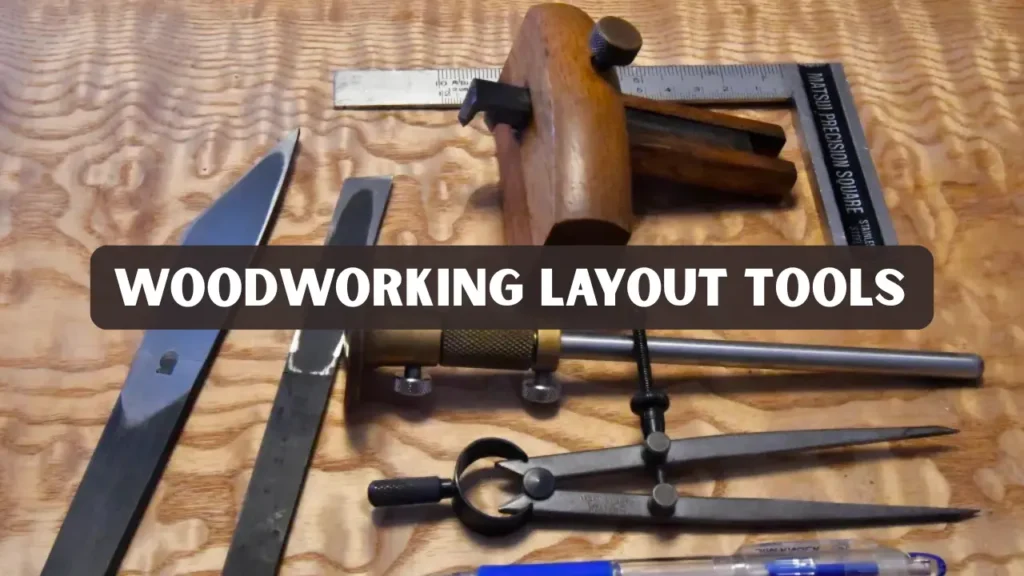
Let’s explore the core layout tools every woodturner should keep in their workshop. Each one enhances measurement, marking, or alignment accuracy for turning projects.
1. Steel Rule
A steel rule is a simple yet fundamental measuring tool. Its rigid and flat structure provides highly reliable readings for marking straight lines and checking the size of wood blanks.
2. Calipers
Calipers measure both internal and external diameters of turned pieces. They are crucial for checking spindle thickness and ensuring duplicate parts match perfectly in size.
3. Dividers
Dividers help transfer measurements or mark equal divisions along a surface. They are ideal for designing decorative rings or consistent patterns on spindle work.
4. Depth Gauge
This tool measures how deep a hollow or cavity goes in your project. A depth gauge helps maintain uniform wall thickness in bowls, boxes, and other hollow forms.
5. Tape Measure
For larger projects such as table legs or stair spindles, a flexible tape measure provides the range that shorter rules cannot. It is excellent for marking long linear dimensions.
6. Marking Knife
The marking knife makes sharp, clean lines that guide precise saw or chisel cuts. It provides far more accuracy than a pencil, especially when defining layout lines near corners.
7. Pencil or Mechanical Marker
Pencils are indispensable for general layout work. Mechanical markers offer consistent line thickness, which is especially helpful on curved or irregular surfaces.
8. Marking Gauge
A marking gauge is used to scribe parallel lines along the grain. It consists of an adjustable fence and a sharp pin, perfect for consistent edge marking.
9. Center Finder
The center finder is vital for locating the true center of a round blank before mounting it on the lathe. Accurate centering minimizes vibration and ensures even turning.
10. Compass
A compass is used for drawing circles or arcs on the wood surface. It is invaluable for planning round designs such as lids, disks, or decorative inlays.
11. Try Square
A try square verifies that edges meet at perfect 90-degree angles. It’s essential for ensuring the squareness of stock pieces before turning.
12. Combination Square
This multi-purpose tool combines a ruler, 45-degree miter, and level in one. It’s one of the most adaptable Woodworking Layout Tools in any workshop.
13. Bevel Gauge
Also known as a sliding bevel, this tool copies and transfers custom angles. It’s perfect for reproducing decorative cuts or matching design patterns.
14. Straightedge
A straightedge helps verify flatness and detect surface warps. It’s particularly helpful in preparing blanks to sit flat on the lathe faceplate.
15. Story Stick
A story stick records measurements for repetitive projects. It’s the best tool for producing multiple spindles, chair legs, or identical turned parts with precision.
Expert Tips
- Keep all tools clean, free of dust, and properly calibrated. This ensures long-term precision and prevents measurement errors during fine turning work.
- Use a sharp marking knife for crisp lines and less tear-out. A well-honed edge leaves cleaner marks, improving accuracy when guiding chisels or saw blades.
- Mark on the waste side of a line to preserve measurement accuracy. This method helps maintain exact dimensions even after cutting or sanding the surface.
- Confirm squareness often, especially before mounting blanks. Checking alignment reduces vibration and ensures smoother rotation on the lathe.
- Double-check all critical measurements before making irreversible cuts. Taking an extra moment to verify dimensions prevents wasted material and ensures consistent results.
Precision in layout saves time later and produces smoother, more symmetrical results on the lathe.
Woodturning Applications
Before turning begins, woodworking layout tools are used to mark the center, check balance, and define depth limits. During the process, they ensure consistency between identical parts.
- Calipers maintain accurate diameters. They’re perfect for checking symmetry when turning multiple identical pieces like spindles or knobs.
- Dividers mark repeating patterns. They help achieve perfect spacing in decorative grooves or bead layouts on bowls and handles.
- Center finders ensure even weight distribution. Using them before mounting a blank minimizes wobble and improves turning safety.
- Story sticks replicate measurements for production turning. They allow you to record precise dimensions for future projects without remeasuring.
These small steps prevent uneven shapes, chatter, and imbalance, common issues in beginner turning projects.
Case Study
A seasoned craftsman working on a set of twelve identical chair spindles faced a challenge: minor variations made the final assembly uneven. The solution came from disciplined use of layout tools.
- The story stick served as the master reference, capturing all critical points for each spindle.
- Calipers maintained identical diameters from one piece to another.
- The marking gauge helped define shoulder depths precisely.
After implementing this method, all twelve spindles matched seamlessly. The project was completed faster, with no rework required. The craftsman later shared that accurate layout planning was the key to maintaining quality while saving time.
Maintenance and Care
Maintaining layout tools ensures longevity and consistent performance:
- Wipe metal parts with light oil to prevent corrosion.
- Store tools in a dry environment to avoid rust.
- Sharpen marking knives regularly for cleaner incisions.
- Check the calibration of squares and calipers frequently.
- Avoid dropping or striking tools that rely on precision alignment.
Taking care of these essentials guarantees dependable accuracy for years of use.
Conclusion
Woodworking Layout Tools are not just instruments for measurement, they are the guiding elements that define craftsmanship quality. From marking to alignment, they ensure that each curve, joint, and spindle follows its intended design.
Whether crafting furniture or turning artistic pieces, precision begins with the right layout. Maintaining these tools, practicing accurate techniques, and understanding their role in project planning will elevate the quality of your work.
FAQs
1. What are the most important Woodworking Layout Tools for turning projects?
Calipers, center finders, and story sticks are essential for any lathe-based work. They guarantee balanced, symmetrical, and consistent outcomes.
2. Can regular woodworking tools be used for woodturning layouts?
Yes, but specialized tools like calipers and center finders are preferred because they are designed for cylindrical shapes and rotating workpieces.
3. How can I maintain precision across multiple turned pieces?
Use a story stick to record and repeat measurements. Combine it with calipers for consistent diameters and uniformity in repeated designs.
4. How often should Layout Tools be calibrated?
For professional accuracy, calibration should be checked quarterly or whenever a tool is dropped or exposed to moisture.
5. Are digital measuring tools more accurate than traditional ones?
Digital tools offer convenience and quick readings, but high-quality manual tools remain reliable for long-term use and are easier to maintain.